Transcranial Magnetic Stimulator Market Size 2026-2035
- Govind Pratap Singh
- Apr 1
- 4 min read

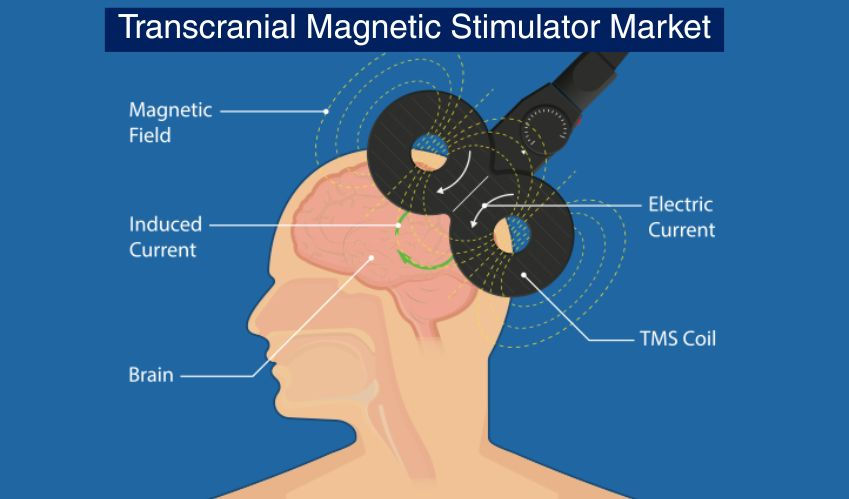
The global medical technology sector is witnessing a transformative era in neuro-rehabilitation and psychiatric care. Central to this evolution is the transcranial magnetic stimulator market, which provides non-invasive neuromodulation solutions to address treatment-resistant neurological and psychiatric conditions. These systems utilize magnetic fields to stimulate nerve cells in the brain, offering a crucial alternative for patients who do not respond to traditional pharmacological interventions for depression, chronic pain, and movement disorders.
The global market was valued at USD 1.42 Billion in 2025 and is projected to expand at a steady CAGR of 9.60% through 2035. By 2035, the market is expected to achieve a valuation of USD 3.55 Billion. According to latest report by Expert Market Research (EMR), the primary growth engine is the increasing prevalence of neurological diseases such as Alzheimer's and Parkinson's (PD), alongside a rising global burden of mental health disorders that demand advanced, non-convulsive therapeutic options.
Transcranial Magnetic Stimulator Market Size and Share
The market is segmented by type into Deep Transcranial Magnetic Stimulation (dTMS), Repetitive Transcranial Magnetic Stimulation (rTMS), and others. While rTMS currently accounts for a substantial share due to its established clinical history, Deep TMS is witnessing rapid commercial momentum in 2026 for its ability to reach deeper brain structures associated with addiction and OCD. Based on application, Depression remains the largest segment; however, applications for Parkinson’s Disease and Alzheimer’s Disease are growing as research validates TMS as a tool for cognitive preservation.
In terms of end users, while Hospitals maintain a dominant share, Specialty Clinics and Home Care Settings are emerging as high-growth areas. This shift is fueled by the development of portable TMS devices and the increasing availability of outpatient neuromodulation protocols. Geographically, North America leads the global share, followed by Europe and the Asia Pacific, with the latter expected to grow at the highest rate due to improving healthcare access in India and China.
Key Growth Drivers of Transcranial Magnetic Stimulator Market
Modern psychiatry is under intense pressure to find solutions for the "treatment gap" in mental health. In 2026, the primary driver is the growing clinical acceptance of TMS as a first-line or early second-line treatment for Major Depressive Disorder (MDD). Its non-invasive nature and lack of systemic side effects—unlike traditional antidepressants—make it highly attractive to patients seeking long-term wellness. Furthermore, advancements in "navigation-guided" TMS, which uses MRI data to target specific brain regions with millimeter precision, have significantly improved patient outcomes.
The integration of TMS into multidisciplinary research for neurodegenerative diseases is also transforming the industry. By utilizing magnetic stimulation to investigate brain plasticity, research institutes are uncovering new pathways for treating epilepsy and stroke recovery. This focus on technological refinement ensures that the cognitive assets of patients are protected through personalized stimulation protocols. However, the high cost of equipment and limited insurance reimbursement in developing regions remain factors that industry players are actively working to address through value-based pricing and expanded clinical evidence.
Regional Outlook and Segmentation Analysis
Based on regional analysis, North America remains the leading market, driven by favorable reimbursement policies and the presence of innovative players like Neuronetics and BrainsWay. Europe maintains a strong focus on academic and research-driven applications, with high adoption in specialized neurology centers. The Asia Pacific region is rapidly closing the gap, as the rising geriatric population and increased healthcare spending in Australia and Japan create new opportunities for neuromodulation expansion.
The competitive landscape is characterized by a mix of specialized medical device firms and major healthcare technology providers. In 2026, focus has shifted toward "accelerated TMS" protocols, which aim to deliver a full course of treatment in just a few days rather than weeks. This focus on efficiency and patient convenience is becoming a primary differentiator for companies looking to capture market share in an increasingly competitive landscape.
Competitive Landscape: Key Market Players
The market features a concentrated structure dominated by companies with deep expertise in neurotechnology and medical physics. Strategic focus in 2026 has shifted toward obtaining regulatory approvals for new indications and expanding global service networks. Key players include:
Neuronetics, Inc.: A pioneer in rTMS, maintaining a strong position with its widespread clinical installation base.
BrainsWay Ltd.: Leading the market in Deep TMS technology with a focus on OCD and smoking cessation.
Magstim & MagVenture A/S: Providers of high-performance magnetic stimulators used extensively in both clinical and research settings.
Nexstim Plc: Specialized in navigated brain stimulation for personalized psychiatric and neurological care.
eNeura Inc.: Focused on portable TMS solutions for the acute treatment of migraine.
Beckman Coulter, Inc. & EB Neuro S.p.A.: Key players in integrated diagnostic and therapeutic neurology solutions.
FAQs
Q: What is the projected market value by 2035?
A: The market is expected to reach approximately USD 3.55 Billion by 2035.
Q: What is the current growth rate of the transcranial magnetic stimulator market?
A: The market is estimated to grow at a CAGR of 9.60% during the forecast period of 2026-2035.
Q: What is the difference between rTMS and Deep TMS?
A: rTMS targets superficial layers of the motor cortex, while Deep TMS uses specialized coils to reach deeper brain structures.
Q: Is TMS treatment covered by insurance?
A: While coverage is high for depression in North America, insurance varies for newer indications like OCD and addiction.
Q: Which region is the fastest-growing for TMS technology?
A: The Asia Pacific region is expected to be the fastest-growing due to rising disease awareness and healthcare infrastructure development.
Read More Insights:
About Us:
Expert Market Research is a global market intelligence and consulting platform by Claight delivering data-driven insights across commodities, chemicals, energy, and industrial markets. We design our research to support businesses, analysts, investors, and procurement teams in understanding price trends, supply-demand dynamics, competitive landscapes, gaining competitive intelligence, benchmarking best practices, and developing long-term market outlooks.
Our robust research methodologies, combined with validated primary and secondary data, ensure accuracy, consistency, and relevance. Our analysis is widely used not only for strategic planning, market-entry assessments, and sourcing decisions, but also for investment evaluation across international markets. Our strong emphasis on transparency, factual reporting, and regular data updates to reflect real-time market conditions always keeps you ahead of the curve.
Media Contact:
Company Name: Claight Corporation
Toll Free Number: +1-415-325-5166 | +44-702-402-5790
Address: C-130 Sector 2 Noida, Uttar Pradesh 201301
Website: https://www.expertmarketresearch.com


Comments